


Sugar mill roller materials include: forged steel, cast iron and SRB alloys. All these materials serve a similar purpose however provide different benefits. Forged Steel uses high steel grades like SAE 4140, AISI 1045, or 42CrMo4 . Cast iron conforms to IS 11201:1985 standards. SRB alloys are developed by SBR Reshellers. SRB alloys combine high point materials like tungsten, molybdenum, tantalum together.
Types of Sugar Mill Roller Materials
Some widely used sugar mill roller materials are: forged steel, iron cast and SRB alloys.

Sugar Mill Roller Materials
Forged Steel
Forged steel shaft rollers are known for their high strengths and durabilities. These rollers are used in high pressure crushing mills. These rollers can resist bending, fatigue, and torque. Furthermore they provide the highest level of longevity.
Specifications:
- Material: Uses high-strength steel grades such as SAE 4140, AISI 1045, or 42CrMo4.
- Hardness: Typically HRC 60–62 after heat treatment.
- Manufacturing Process: Forged blanks followed by quenching, tempering, and final machining.
- Applications: Specifically used for top rollers in high-load and high-speed mills.
Statistical Facts:
- Maximum Shear Stress: Approximately 121.94 MPa.
- Total Deformation: Around 0.4139 mm.
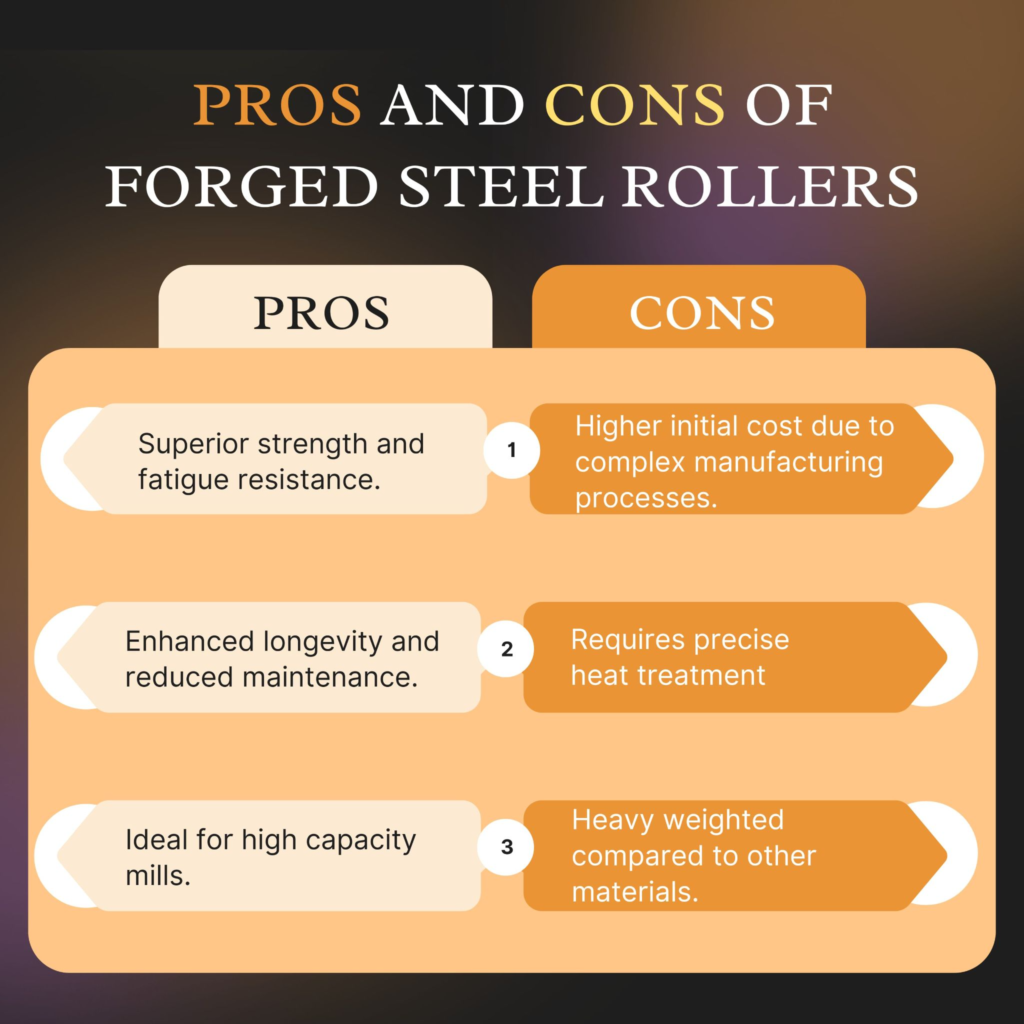
Pros & Cons of Forged Steel Rollers
Cast Iron
Cast iron rollers are an industrial standard and widely used. These rollers have high wear resistance properties and are also cost effective. The surfaces of these rollers can be grooved. This improves its overall grip and juice extraction efficiencies.
Specifications:
- Material: Grey cast iron conforming to IS 11201:1985 standards.
- Structure: Cast iron shell mounted on a forged steel shaft.
- Applications: Commonly used for feed and discharge rollers in conventional mills.
Statistical Facts:
- Maximum Shear Stress (Top Roller): Approximately 123.73 MPa.
- Total Deformation (Top Roller): Around 0.754 mm.
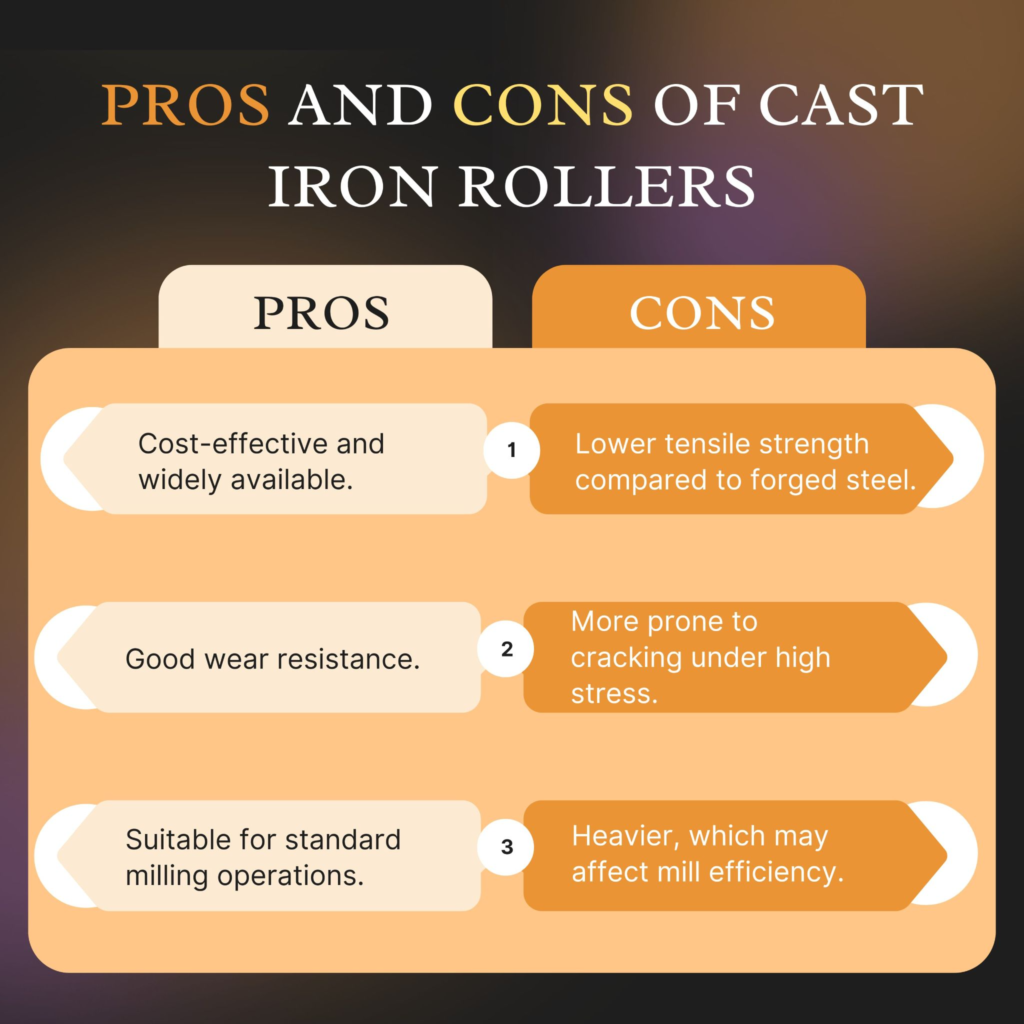
Pros & Cons of Iron Cast Rollers
SBR Alloy
SBR alloys are the most advanced materials. They are altered for environments demanding superior wear and corrosion resistance. These rollers offer high durability in harsh crushing conditions. This makes them an efficient long term investment.
Specifications:
- Material: Proprietary alloy developed by SBR Reshellers, offering increased tensile strength and wear resistance.
- Applications: Used for specialized rollers requiring enhanced performance, such as perforated or sleeve Kamal rollers.
Statistical Facts:
- Enhanced Wear Resistance: Significantly improves juice extraction efficiency.
- Tensile Strength: Superior to standard cast iron, reducing the risk of roller failure
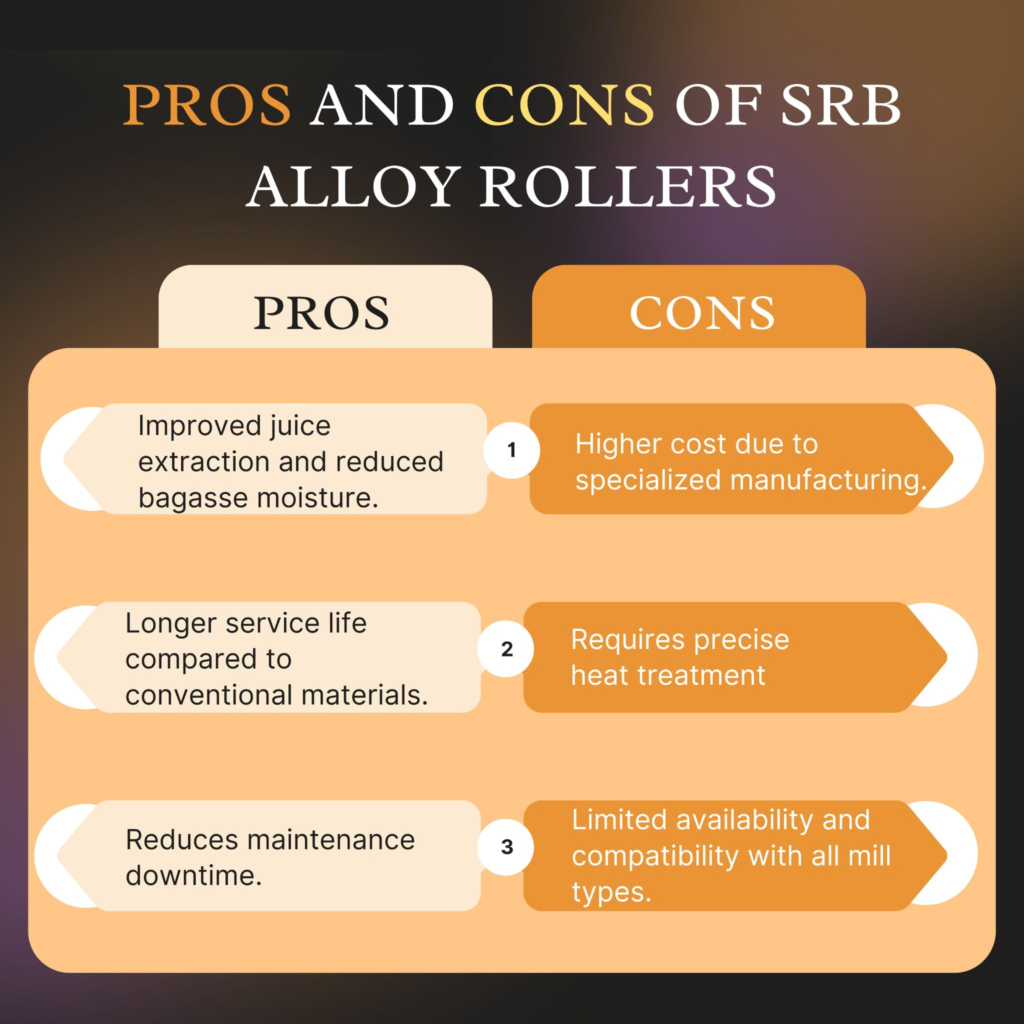
Pros and Cons of SRB Alloy Rollers
How the Materials Work Together?
For a good balanced sugar mill roller you should combine forged steel shaft with either cast iron shell or SBR alloy shell.
The forged steel should be used to provide a strong shaft structure. The outer shell should be made from cast iron due to its good casting characteristics. SBR alloys should be used for outer shells if there are harsh working conditions.
This composite design reduces total downtime. According to the Australian sugar industry, downtimes can average between 10–12 failures per year per mill.
Comparison Table of Sugar Mill Materials
| Feature | Forged Steel | Cast Iron | SRB Alloys |
| Tensile Strength | High | Moderate | Very High |
| Hardness | High | Moderate | High |
| Wear Resistance | Excellent | Good | Excellent |
| Cost | High | Low | High |
| Ideal Use | High-capacity mills | Standard mills | Specialized applications |
FAQs on Sugar Mill Roller Materials
Q1: What is the best material for sugar mill rollers?
A combination of forged steel shaft and SBR alloy shell should be used. Forged steel shafts can work for 10-15 years and iron cast shells can work for 3-7 years, if maintained well. For harsh working conditions they can have a life of 2-3 years. Thus, for harsh working conditions the SRB alloy shell should be used with a forged steel shaft.
Q2: Difference between cast iron and steel rollers?
Steel rollers provide less maximum shear stress compared to iron cast rollers.Steel rollers have a maximum shear stress of approximately 121.94 MPa. However cast iron has maximum shear stress of approximately 123.73 MPa.
However steel rollers resist the total deformation more than the iron cast rollers. Steel roller can have a total deformation of around 0.4139 mm. However, cast iron can have a total deformation of around 0.754 mm.
Q3. How often should roller shells be replaced?
A decent sugar mill roller under good maintenance, moderate load and standard cane quality has long life. Its shell needs replacement every ~ 3–5 seasons. The shaft is replaced after every 5-7 seasons or sooner if shaft shows cracks, downtimes, diameter loss.
However, a roller working under harsh conditions and immense load needs to be replaced after every 1-2 seasons.
Q4. Are SBR alloy shells better than cast iron?
Yes. SBR alloys are manufactured by combining different metals with very high melting points. These metals include tungsten, molybdenum, tantalum together. This combination of metal provides higher strength and better wear resistance compared to all other rollers.
Order Your Sugar Mill Roller Now
As an expert in Sugar Mill Roller Chinese Manufacturing, we offer customised sugar mill rollers. Choose us for your sugar mill rollers, which promise superior performance, high durability, and a secure future. Partner with us to enhance your mill’s productivity.
Conclusion
Sugar mill roller materials include: forged steel, cast iron and SRB alloys. All these materials serve a similar purpose however provide different benefits and drawbacks. For an optimum sugar mill roller, use forged steel shaft and cast iron shell. For harsh conditions use SRB alloy instead of cast iron shell.
